
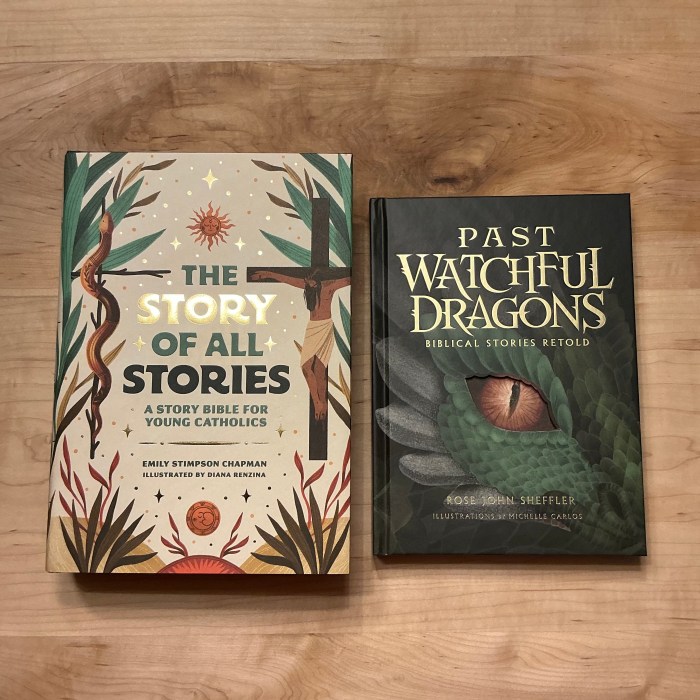
Along with McCullough’s The Body of This Death, I acquiesced to the seller’s suggestion that I purchase these conveniently discounted items. I cannot vouch for them yet, but I’m hoping they can live up to some Eugene Peterson-sown hopes.
Here’s Peterson in the introduction to Reversed Thunder:
Every Monday I leave the routines of my daily work and hike along the streams and through the forests of Maryland. The first hours of that walk are uneventful: I am tired, sluggish, inattentive. Then birdsong begins to penetrate my senses, and the play of light on oak leaves and asters catches my interest. In the forest of trees, one sycamore forces its solid rootedness on me, and then sends my eyes arcing across trajectories upwards and outwards. I have been walking these forest trails for years, but I am ever and again finding an insect that I have never seen before startling me with its combined aspects of ferocity and fragility. How many more are there to be found? A rock formation, absolutely new, thrusts millions of years of prehistory into my present. This creation is so complex, so intricate, so profuse with life and form and color and scent! And I walk through it deaf and dumb and blind, groping my way, stupidly absorbed in putting one foot in front of the other, seeing a mere fraction of what is there. The Monday walks wake me up, a little anyway, to what I miss in my sleepy routines. The wakefulness lasts, sometimes, through Thursday, occasionally all the way to Sunday. A friend calls these weekly rambles “Emmaus walks”: “And their eyes were opened and they recognized him” (Luke 24:31).
Ordinarily, I would succumb to the temptation to go down some path with Sven or something, but Peterson is going somewhere one would probably not expect. “What walking through Maryland forests does to my bodily senses,” he says, “reading the Revelation does to my faith perceptions.”
That’s right, reading the book of Revelation is like taking a soul-refreshing, eyes-open walk in the woods.
[F]or people who are fed up with [the] bland fare, the Revelation is a gift—a work of intense imagination that pulls its reader into a world of sky battles between angels and beasts, lurid punishments and glorious salvations, kaleidoscopic vision and cosmic song. It is a world in which children are instinctively at home and in which adults, by becoming as little children, recapture an elemental involvement in the basic conflicts and struggles that permeate moral existence, and then go on to discover again the soaring adoration and primal affirmations for which God made us.
[…]
I read the Revelation not get more information but to revive my imagination.…
Maryland forests and St. John’s Apocalypse show me over and over again that when I am bored it is no fault of creation or covenant. Familiarity dulls my perceptions. Hurry scatters my attention. Ambition fogs my intelligence. Selfishness restricts my range. Anxiety robs me of appetite. Envy distracts me from what is good and blessed right before me. And then Monday’s unhurried pace and St. John’s apocalyptic vision bring me to my senses, body and soul.
As a pastor reading St. John as a pastor, Peterson concludes that “this book does not primarily call for decipherment, as if it were written in code, but that it evokes wonder, releasing metaphors that resonate meanings and refract insights in the praying imagination” and that “an exercised imagination is essential to a full-bodied and full-souled life in Christ.”
So, you can see why my expectations for the books above might be high. Here’s the note from the author of Past Watchful Dragons:
This is a collection of new fairy tales, inspired by the real biblical stories that we are all familiar with. I have chosen to tell these stories inside an imaginary and magical world called Erith. By doing so, I am giving very old truths new clothes to wear, so you might meet them again, as if for the first time.
I invite you to read these stories and experience the truth from a fresh perspective, remembering that fairy tales are not factual and are not meant to be. But they are always true.
Her epigraph and title come from C.S. Lewis, in a 1956 Times piece about writing The Chronicles of Narnia:
… I wrote fairy tales because the Fairy Tale seemed the ideal Form for the stuff I had to say. Then of course the Man in me began to have his turn. I thought I saw how stories of this kind could steal past a certain inhibition which had paralyzed much of my own religion in childhood. Why did one find it so hard to feel as one was told one ought to feel about God or about the sufferings of Christ? I thought the chief reason was that one was told one ought to. An obligation to feel can freeze feelings. And reverence itself did harm. The whole subject was associated with lowered voices; almost as if it were something medical. But supposing that by casting all these things into an imaginary world, stripping them of their stained-glass and Sunday school associations, one could make them for the first time appear in their real potency? Could one not thus steal past those watchful dragons? I thought one could.
And just to wrap this up, here is George Herbert’s poem, from which Peterson takes his own title:
Prayer (I)
Prayer the Church’s banquet, Angels’ age,
God’s breath in man returning to his birth,
The soul in paraphrase, heart in pilgrimage,
The Christian plummet sounding heav’n and earth;
Engine against th’ Almighty, sinners’ tower,
Reversed thunder, Christ-side-piercing spear,
The six-days world-transposing in an hour,
A kind of tune, which all things hear and fear;
Softness, and peace, and joy, and love, and bliss,
Exalted Manna, gladness of the best,
Heaven in ordinary, man well dressed,
The milky way, the bird of Paradise,
Church-bells beyond the stars heard, the soul’s blood
The land of spices; something understood.