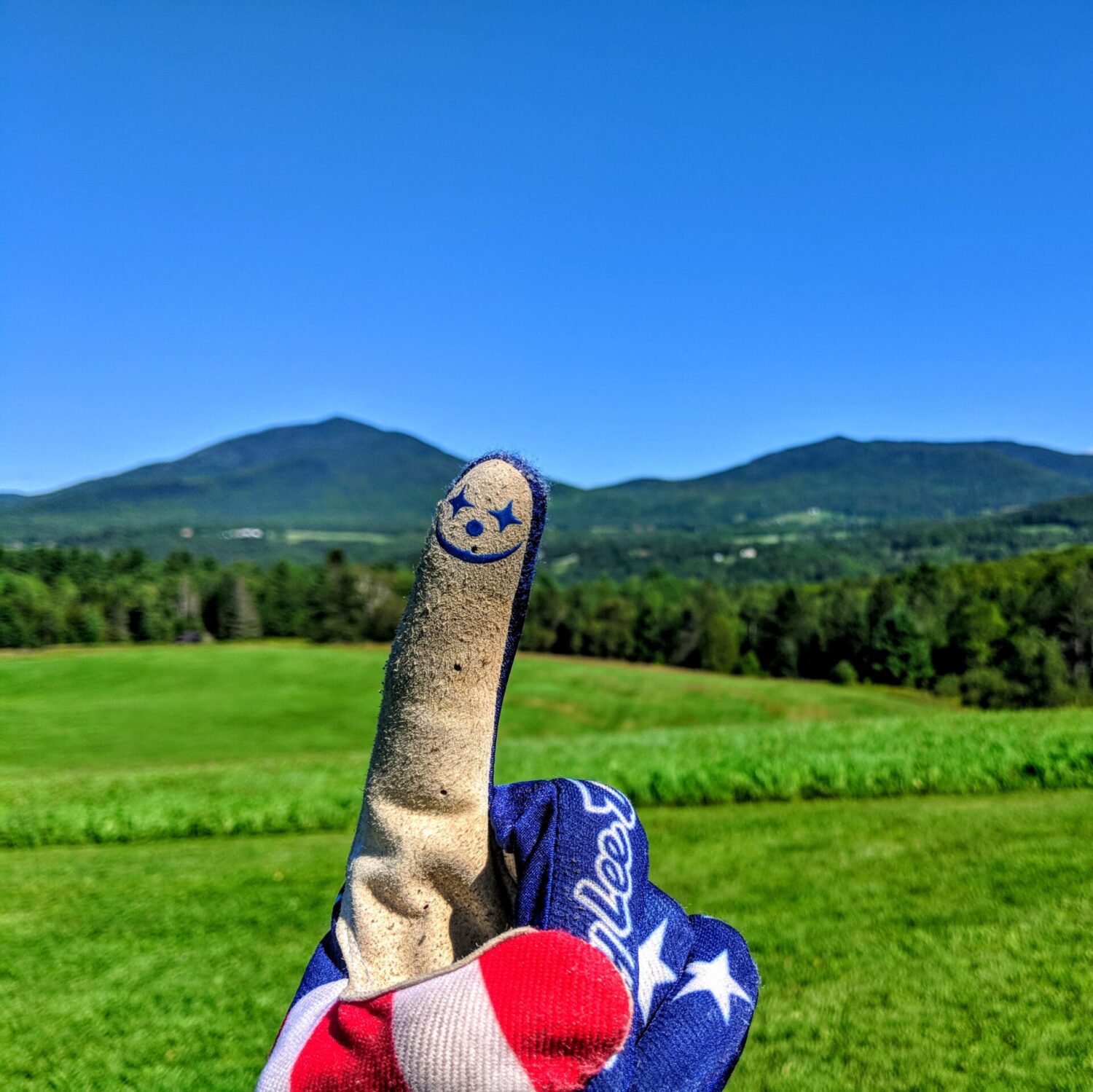
admiring vultures


A conversation on the walk home from work has me thinking about… well, I don’t know what. But this other poem, prose, & praise from late April is close to it.
Photo by Larry D James
The Kingfisher
The Kingfisher rises out of the black wave
like a blue flower, in his beak
he carries a silver leaf. I think this is
the prettiest world—so long as you don’t mind
a little dying, how could there be a day in your whole life
that doesn’t have its splash of happiness?
There are more fish than there are leaves
on a thousand trees, and anyway the kingfisher
wasn’t born to think about it, or anything else.
When the wave snaps shut over his blue head, the water
remains water—hunger is the only story
he has ever heard in his life that he could believe.
I don’t say he’s right. Neither
do I say he’s wrong. Religiously he swallows the silver leaf
with its broken red river, and with a rough and easy cry
I couldn’t rouse out of my thoughtful body
if my life depended on it, he swings back
over the bright sea to do the same thing, to do it
(as I long to do something, anything) perfectly.
~ Mary Oliver ~
That poem, which needs no commentary, came to mind reading Barbara Kingsolver’s essay “Seeing Scarlet” this afternoon. She describes a trip in Costa Rica to catch a rare glimpse of a scarlet macaw in the wild—uncaged and, therefore, more truly seen.
As we climbed into the Talamanca Highlands on a pitted, serpentine highway, the forest veiled the new ahead but always promised something around the next bend. We were two days south of San José, in a land where birds lived up to the extravagance of their names: purple-throated mountain gems, long-tailed silky flycatchers, scintillant hummingbirds. At dawn we’d witnessed the red-green fireworks of a resplendent quetzal as he burst from his nest cavity, trailing his tail-feather streamers. But there’d been no trace of scarlet yet, save for the scarlet-thighed dacnis (yes, just thighs—not his feet or lower legs). Having navigated through an eerie morning mist in an elfin cloud forest, we found ourselves at noon among the apple orchards on slopes so steep as to make the trees seem flung there instead of planted.
[…]
On the river safe and sound, with the Golfo Dulce a steady blue horizon on our left, we rattled on southward through small fincas under the gaze of zebu cattle with their worldly wattles and huge downcast ears. Between farms the road was shaded by unmanicured woodlots, oil-palm groves, and the startling monoculture of orchard-row forests planted for pulp. The dark little feathered forms of seedeaters and grassquits lined the top of wires of fences like intermittent commas in a run-on sentence. To give our jostled bones and jeep a break, we stopped often; any bird was a good enough excuse. A dark funnel cloud swirling above a field turned out to be a vast swarm of turkey- and black vultures. With our binoculars we scanned the vortex down to its primogenitor: a dead cow, offering itself up for direct recycling back into the food chain. Most of the peninsula’s airborne scavengers, it seemed, had just arrived for dinner. Angling for position, near the carcass, two king vultures flapped their regal black and white wings and rainbow-colored heads at each other. “Wow, amazing, gorgeous!” we muttered reverently, gawking through our binoculars, setting new highs in vulture admiration.
I’m not sure vultures are ever as attractive as macaws, or do anything as perfectly as a kingfisher, but there is something in the awe even of predators and scavengers. If I had it in front of me I would add a picture I have somewhere at home, of the first I recall ever admiring a vulture. It was on a hike Pennsylvania several years ago, and two black vultures landed like helicopters barely more than an arm’s length away from where I was sitting on a cliff. I couldn’t tell you now if I felt at home in that moment or completely out of place.
One of the reasons I’m so enjoying Wiman’s Joy anthology is because I keep finding fresh ways that it—the theme broadly and the poems specifically—points such a paradoxically direct finger at that question that I keep circling around: How do I remain academic while simultaneously trying to break the didactic hold on so much of life and faith? (“For this soul needs to be honoured with a new dress woven / From green and blue things and arguments that cannot be proven.”)
I’ve been reading (slowly and very intermittently) a book with my pastor by Esther Meek called Longing to Know. Meek’s basic goal is to expand on one key sentence, largely derived from her dissertation on the Hungarian chemist-philosopher Michael Polanyi: “Knowing is the responsible human struggle to rely on clues to focus on a coherent pattern and submit to its reality.” A loaded sentence, for sure. But one thing it necessarily means—and this fact is what has driven me to people like Polanyi and Meek and Wiman (and Jesus)—is that much of life consists of and abides within the ineffable.
Thus, Frederick Buechner:
And the answer that she could not have heard even if I had given it was that it was not an idea at all, neither my own nor anyone else’s. It was a lump in the throat. It was an itching in the feet. It was a stirring in the blood at the sound of rain. It was a sickening of the heart at the sight of misery. It was a clamoring of ghosts. It was a name which, when I wrote it out in a dream, I knew it was a name worth dying for even if I was not brave enough to do the dying myself and could not even name the name for sure. Come unto me, all ye who labor and are heavy laden, and I will give you a high and driving peace. I will condemn you to death.
I’m not ready to tackle those last two sentences. (Is there something in that high and driving peace and death that’s necessarily and inexplicably bound up in the just-out-of-reach lump, itching, stirring?) But there is something indescribable, ungraspable, and always elusive that is yet no less real for its mystery or its secrecy, and maybe more real just because of it. (And no less alive for the death it brings?)
I was doing some reading for a discussion in class last week and took a quote from another of Wiman’s books, Ambition and Survival:
Some knowledge must be partial in order to be knowledge, the poem tells us, and there are experiences we can only have if we never quite have them.
There’s something oddly complete in the partial and the never-quite. Maybe it’s something like the view of a wild, uncaged scarlet macaw; and maybe it’s better—maybe it’s always better left implied, pointed at. Though Wiman was commenting on Thomas Hardy’s “The Shadow on the Stone,” he could just as easily have been commenting on a passage from Marilynne Robinson’s Housekeeping, which he has quoted often and which, along with the book itself, may very nearly capture the paradox:
For need can blossom into all the compensations it requires. To crave and to have are as like as a thing and its shadow. For when does a berry break upon the tongue as sweetly as when one longs to taste it, and when is the taste refracted into so many hues and savors of ripeness and earth, and when do our senses know any thing so utterly as when we lack it? And here again is the foreshadowing—the world will be made whole. For to wish for a hand on one’s hair is all but to feel it. So whatever we may lose, very craving gives it back to us again. Though we dream and hardly know it, longing, like an angel, fosters us, smooths our hair, and brings us wild strawberries.
One of my favorite passages from Miroslav Volf’s Exclusion and Embrace:
For the followers of the crucified Messiah, the main message of the imprecatory Psalms is this: rage belongs before God—not in the reflectively managed and manicured form of a confession, but as a pre-reflective outburst from the depths of the soul. This is no mere cathartic discharge of pent up aggression before the Almighty who ought to care. Much more significantly, by placing unattended rage before God we place both our unjust enemy and our own vengeful self face-to-face with a God who loves and does justice. Hidden in the dark chambers of our hearts and nourished by the system of darkness, hate grows and seeks to infest everything with its hellish will to exclusion. In the light of the justice and love of God, however, hate recedes and the seed is planted for the miracle of forgiveness. Forgiveness flounders because I exclude the enemy from the community of humans even as I exclude myself from the community of sinners. But no one can be in the presence of the God of the crucified Messiah for long without overcoming this double exclusion—without transposing the enemy from the sphere of monstrous inhumanity into the sphere of shared humanity and himself or herself from the sphere of proud innocence into the sphere of common sinfulness. When one knows that the torturer will not eternally triumph over the victim, one is free to rediscover that person’s humanity and imitate God’s love for him or her. And when one knows that God’s love is greater than all sin, one is free to see oneself in the light of God’s justice and so rediscover one’s own sinfulness.
In the presence of God our rage over injustice may give way to forgiveness, which in turn will make the search for justice for all possible. If forgiveness does take place it will be but an echo of the forgiveness granted by the just and loving God—the only forgiveness that ultimately matters because, though we must forgive, in a very real sense no one can either forgive or retain sins “but God alone” (Mark 2:7).
[Augustine] is moved to reject even the tempting compensatory lie when he calls to mind “the beauty of Him from whose mouth nothing false proceeded.” Speech is not simply our possession; it is God’s gift to us. To recognize and acknowledge this gift in truthful words is to offer grateful praise to the One from whom it comes. Paul Griffiths makes just this point in characterizing Augustine’s reason for rejecting all lies. “Lying speech is owned, controlled, taken charge of, characteristically and idiosyncratically yours. True speech is disowned, relinquished, returned as gift to its giver, definitely and universally not yours. . . . The true antonym of mendacium, for Augustine, is adoratio, or its close cousin, confessio; and the fundamental reason for banning the lie without exception is that when we speak duplicitously, we exclude the possibility of adoration.”
Gilbert Meilaender, The Way That Leads There
Q. 143. Which is the ninth commandment?
A. The ninth commandment is, Thou shalt not bear false witness against thy neighbour.
Q. 144. What are the duties required in the ninth commandment?
A. The duties required in the ninth commandment are, the preserving and promoting of truth between man and man, and the good name of our neighbor, as well as our own; appearing and standing for the truth; and from the heart, sincerely, freely, clearly, and fully, speaking the truth, and only the truth, in matters of judgment and justice, and in all other things whatsoever; a charitable esteem of our neighbors; loving, desiring, and rejoicing in their good name; sorrowing for and covering of their infirmities; freely acknowledging of their gifts and graces, defending their innocency; a ready receiving of a good report, and unwillingness to admit of an evil report, concerning them; discouraging talebearers, flatterers, and slanderers; love and care of our own good name, and defending it when need requireth; keeping of lawful promises; studying and practicing of whatsoever things are true, honest, lovely, and of good report.
A little intellectual help for loving your enemies—and your friends, and your family, and your coworkers, and your political parties (plural), and your national forebears, etc.—because you should.
From the always worthwhile and ever-Augustinian Gilbert Meilaender, in his fantastic essay on the “paradoxes of virtue”—i.e., life.
We are likely to think—I myself often tend to think—that an air of the tragic permeates this discussion. A great man like Regulus serving a false god. An honorable man like Rommel caught up in the wrong cause. The noblest Roman of them all a garden-variety assassin. A man as honorable as Robert E. Lee putting his skill in service of an evil regime. Ulysses’s brave search to see and know what no human being has ever seen stained by a willingness to leave behind those who love and depend on him. Judas’s necessary participation in God’s redemptive handing over of his Son to those intent on destroying him.
There would be something wrong with us if we were entirely unmoved by such examples, but we should not merely wring our hands and bewail our fate. We pay a price for savoring the tragic too much. And the price we pay is that we lose the sense that we are always “on the way” in life—and that to seek virtue is to embark on a journey that requires more than just the piecemeal acquisition of certain character traits. It requires a transformation of who we are. To put the matter more theologically, we might say that the unity of the virtues is an eschatological possibility—the end of the journey, not a rest stop along the way. And it should be no surprise that when we forget this, our public life becomes increasingly shrill, driven by a desire for purity here and now.
Something written back in mid April. A poem, a prose, and a praise—which just sounded like a good combination and a good excuse to cogitate.
From Robert David Winterfeld, translated from German by Elisabeth Young-Bruehl in her biography of Hannah Arendt:
While the other man is in his house
where he is part human,
part mouse,
I stand in wonder permanent
with the doorknob in my hand.
I can’t decide if that’s inspiring or if it’s rubbish. Like that famous quote about those who don’t travel only ever reading one page of the world’s book—it sounds enchanting and revealing, but at some point you realize that the aphorism is mostly trivial and maybe even a trick, if not completely false. (What if it’s the traveler who only takes the time to read a single page of the world’s many books?) I also really don’t know how, or if, it fits with or speaks to a stay-at-home ordered life, but that’s okay.
From Marilynne Robinson’s Housekeeping:
We walked north with the lake on our right hand. If we looked at it, the water seemed spread over half the world. The mountains, grayed and flattened by distance, looked like remnants of a broken dam, or like the broken lip of an iron pot, just at a simmer, endlessly distilling water into light.
But the lake at our feet was plain, clear water, bottomless with smooth stones and simple mud. It was quick with small life, like any pond, as modest in its transformations of the ordinary as any puddle. Only the calm persistence with which the water touched, and touched, and touched, sifting all the little stones, jet, and white, and hazel, forced us to remember that the lake was vast, and in league with the moon (for no sublunar account could be made of its shimmering, cold life).
As Christian Wiman said of “sweet” in Gertrude Stein’s poem “Susie Asado”, it’s that last “touched” that’s inspired.
Poem anthologies are always a treat. I’ve been picking at Christian Wiman’s Joy a little at a time. (That’s an interesting sentence). I take a poem or two a day and, every few hours, pace the kitchen with the words and paper in my hands, to break away from the computer screen. A favorite one this week is David Ferry’s “Out at Lanesville.” I like several elements of this one. There’s something about a spray-painted and hoarsely uttered expletive being spoken “to the random winds and to the senseless waves” that’s worth both a chuckle and a depth of thought. And like many good poems, the last stanza—that poetic mental ellipsis—reshapes exactly as it should, sending you thoughtfully away and, simultaneously, inviting another reading.
It’s the second to last part that I keep going back to, though, almost with a double vision. I imagine the scene as I suppose I should: a Monet of blue dress pants and white summer dresses, on the rocks and in the boat. But I also see another present and ubiquitous scene, one of empty streets, closed doors, hidden selves—all working it out.
The voices of some people out in a boat somewhere
Are carried in over the water with surprising
Force and clarity, though saying I don’t know what:
Happiness; unhappiness; something about the conditions
Of all such things; work done, not done; the saving
Of the self in the intense work of its singleness,
Learning to live with it. Their lives have separate ends.
Reflecting on the day’s current events, a friend recently asked me what my thoughts were about “all this.” I wish I had a good answer, but the truth is that I have very few thoughts—or too many; I can’t decide. They vary minute by minute, but not because I’m fickle (though I might be). There’s just too much to keep track of and too many different experiences. Sure, my friends and my family and I are still healthy. I still have a job and I’ll still graduate in May. And being shut up with books and studies and reaching out to people when I feel like it is not exactly a bad week, or even month, for introverted me. But for a friend whose AA meetings have cancelled or for difficult relationships that relied on a certain social distancing, before social distancing shut them up together—who’s to say.
Sometimes it’s best to keep our hands over our mouths. In a way, I think this is what poetry is often paradoxically doing.
From A. R. Ammons, “A Poem Is a Walk”:
My predisposition, which I hope shortly to justify, is to prefer confusion to oversimplified clarity, meaninglessness to neat, precise meaning, uselessness, to overdirected usefulness. I do not believe that rationality can exhaust the poem, that any scheme of explanation can adequately reflect the poem, that any invented structure of symbology can exceed and therebye replace the poem.
I must stress here the point that I appreciate clarity, order, meaning, structure, rationality: they are necessary to whatever provisional stability we have, and they can be the agents of gradual and successful change. And the rational critical mind is essential to making poems: it protects the real poem (which is nonrational) from blunders, misconceptions, incompetences; it weeds out the second rate. Definition, rationality, and structure are ways of seeing, but they become prisons when they blank out other ways of seeing. If we remain open minded we will soon find for any easy clarity an equal and opposite, so that the sum of our clarities should return us where we belong, to confusion and, hopefully, to more complicated and better assessments.
Unlike the logical structure, the poem is an existence which can incorporate contradictions, inconsistencies, explanations and counter-explanations and still remain whole, unexhausted and inexhaustible; an existence that comes about by means other than those of description and exposition and, therefore, to be met by means other than or in addition to those of description and exposition.
And all this, really, Patrick Kavanagh said in two simple lines: “For this soul needs to be honoured with a new dress woven / from green and blue things and arguments that cannot be proven.”
Finally brothers and sisters, rejoice. Aim for restoration, comfort one another, agree with one another, live in peace; and the God of peace will be with you. Greet one another with a holy kiss (while respecting health service guidelines, recommendations, and personal space bubbles). All the saints (in any group size, no matter how small, who love and serve Jesus) greet you.
The grace of the Lord Jesus Christ and the love of God and the fellowship of the Holy Spirit be with you all.